
Household Water Filter - tests (HWF)
Scope:
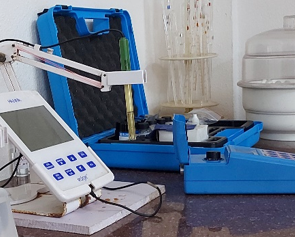
Physical & Sensory Parameters:
Colour (Appearance & True Colour Units), Odour, Turbidity, pH & Electrical Conductivity (EC); Total Dissolved Solids (TDS) estimated from EC (TDSE).
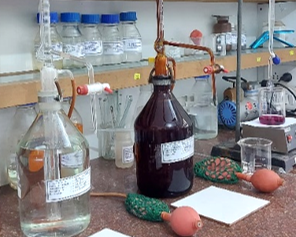
Chemical Parameters:
Hardness, Calcium (Ca), Magnesium (Mg); Nitrate (NO3), Fluoride, Boron, Chloride, Sulfate & Sodium.
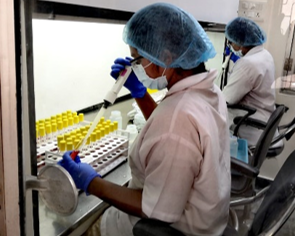
Bacteriological Parameters:
Detection of Total coliforms & E. coli in 100 ml; by
Membrane Filtration & Chromogenic agar plating (MFC),
Or Enzyme Substrate Autoanalysis (ESA).
Total parameters: 5 + 9 + 2 = 16 + 1 Estimated value (TDSE)
Rationale:
Metro and municipal water supplies are prima facie reliable sources of potable water. However, occasional vulnerabilities in the municipal water distribution network (WDN) — extending to street-level water pipelines — can cause faecal contamination events. Households relying on groundwater should check their water’s potability by testing samples taken directly from the borewell delivery pipe. Nevertheless, groundwater quality is dynamic, and contamination events can never be completely ruled out. The purpose of household water purifiers is to provide a final layer of protection against accidental contamination from source vulnerabilities or household storage facilities.

Ideally, the mineral profile of the source water should be considered when choosing an appropriate water purifier design. For example, the total dissolved solids (TDS) level of municipal water in Hyderabad is almost always within the acceptable limit of 500 mg/L. In this case, an ultrafiltration plus ultraviolet (UF+UV) water purifier is more than adequate. On the other hand, the TDS of groundwater from deep borewells is usually higher. Strictly speaking, reverse osmosis (RO) water purifiers—which remove 90% to 99% of dissolved minerals from feedwater—are useful for treating borewell water, but they are redundant for municipal water. However, many people buy RO water purifiers for municipal water due to aggressive marketing and a desire for absolute safety. Home appliance brands often market RO as the gold standard of ‘pure’ water, creating a perception that simpler filters are unsafe. Many modern domestic water purifiers bundle RO with UV, making it the default option sold in stores regardless of the source water quality.
One of the side effects of RO technology is the excessive removal of minerals, resulting in aggressive water (low pH and/or low mineral content). Low-mineral water tastes bland, does not quench thirst well, and causes impurities to leach from metallic containers into the drinking water. The expert committee constituted by the National Green Tribunal recommended a TDS level of 150 mg/L for RO-treated drinking water (NGT, 2019). To achieve this target, domestic RO water purifier designs should allow for TDS adjustment and incorporate a remineralisation unit.
It is necessary to test the quality of RO purified water to ensure that the filters and membrane are working safely. Ideally, purified water should be tested after installation to establish a baseline and after every maintenance involving the replacement of filters and/or the main RO membrane. RO water purifiers should be serviced at least once a year and more often if consumers notice strange tastes, odd smells, cloudy water or slow water flow.
The HRO is an economical test package to check the potability of water from domestic RO purifiers. Most physical and sensory parameters are included, except for taste, which the user can test at home. The Total Dissolved Solids (TDS) level can be estimated from the electrical conductivity included in the package. A mineral profile characterized by general chemical parameters—such as hardness, calcium, magnesium, sodium, chloride, and sulfate—coupled with the TDS estimated from electrical conductivity (EC), helps assess the overall health of the purifier, container compatibility, and the palatability of the treated water. In addition, nitrate, fluoride, and boron are included to ensure these minerals are within acceptable limits for drinking water. The detection of total coliforms and E. coli is essential to rule out fecal contamination and to determine whether a health risk exists.
Sample - Collection, Storage & Transportation:
Follow methods of sampling specified in IS 17614 Part 1:2021 for chemical tests and in IS 1622: 1981 for bacteriological tests. Use a 1L clean and dry clear or amber colour glass or polypropylene bottle (CBWS / ABWS) for chemical lab sample, and a 250 ml clean sterile bottle (CSBF/SBTD) for bacteriological sample. Draw the sample directly from the dedicated purifier tap or the specific filtered water line after letting the water run briefly to clear the line. Avoid touching the inside of the sample cap or bottle.
Step-1: Gather all that you need for collection of water sample:
One litre sample collected in a clean and dry clear or amber colour polypropylene bottle (CBWS/ABWS) is required for physical and chemical tests. About 250 ml of water sample collected in a clean sterile bottle for freshwater (CSBF) or Sterile Bottle with Thiosulfate for Drinking / Fresh water. (SBTD) is required for bacteriological tests. You need a pair of sample collection bottles (1xCBWS + 1xCSBF/SBTD), two black or dark colour polythene bags (small garbage bag will do) to minimise exposure of samples to sunlight, ice packs to keep the sample bottles cool during transport and a carry bag for convenient transport.
Both CBWS and CSBF/SBTD are available from the IHS Laboratory. If it is not feasible for you to collect the specified sample collection bottles from the laboratory and you must collect samples, freshly emptied packaged drinking water bottles or new PET bottles may be used, in that order. If only one freshly emptied packaged water bottle is available, then use the same to collect bacteriological sample. Do not use empty beverage bottles such as ThumsUp, Maaza, Sprite, Coca Cola for bacteriological sample. Nutrients and other residues in such bottles may promote growth of bacteria and bias test results.
Step-2: Collect sample directly from water filter outlet/faucet:

- Wash both your hands with soap and water, wipe with a clean towel and let it dry.
- Label the sample collection bottles and place it within easy reach, but do not open at this stage. Have ice packs ready.
- Then flush the water filter faucet by letting water out for 10 seconds.
- Collect the sample for physical and chemical analysis first; followed by collection of bacteriological-sample.
- Collect sample from the water filter faucet until the bottle is about to be full. Quickly cap sample bottle tightly. Wipe outside of bottle dry with a clean and dry tissue or cloth.
- Place the bottle(s) inside separate dark colour bags, tie ice packs around each of them and place it in a carry bag for transport to laboratory.
Step-3: Transport to laboratory:
Transport the samples to laboratory as soon as possible, preferably within six hours. If you have multiple errands in the same trip, plan to first deposit sample the laboratory and then continue with other activities.
Step-4 Store sample, if required:
If immediate transport is not feasible, store the sample inside the regular chamber (not the freezer compartment) of a refrigerator until you are ready to transport it to the Laboratory, and definitely within 24 hours from the time of collection.
Information About Source, Context, and Client Concerns:
Provide information about the make, model, age and date of last servicing of the RO purifier. State the consumer concerns and why the test was called for. Provide as much detail as you can about the source of feed water, municipal supply or groundwater. Describe intermediate storage and distribution arrangements namely, sump, overhead tank. Households and apartment complexes relying multiple sources should inform whether intermediate storage and distribution systems for municipal supply, borewell water and tanker water are separate or mixed and the system to which the RO purifier is connected. Occasionally, the IHS Laboratory may contact you for clarifications and additional information about the source and its environment, to help interpretation of test results.
Test Method & Duration:
Organoleptic, physical and chemical characteristics of water sample are tested according appropriate parts of the IS3025 and/or American Public Health Association (APHA). For bacteriological analysis methods specified in IS1622 of 1981 are used. Test methods in brief for parameters included in this package can be seen at https://www.ihs.org.in/lab/chemlab.html (physical & chemical) and https://www.ihs.org.in/lab/biolab.html (microbial). Depending on time taken for bacteriological analysis, and gathering of additional information/clarifications, if any is required for interpretation of results; report will be available in 3 to 5 days.

To pick up sample collection bottle and/or schedule collection of samples: Email: ihslab@ihs.org.in with your address and contact telephone; OR WhatsApp: +919848011251; Or Call: 23211013/4.
References:
- IS10500. 2012. Indian Standard Drinking Water Specification. 2nd Revision. New Delhi: Bureau of Indian Standard (BIS); 2012 May, RA2023Amd4.
- IS14543. 2024. Packaged Drinking Water (Other than Packaged Natural Mineral Water) - Specification (3rd Revision). New Delhi: Bureau of Indian Standards (BIS); Indian Standard, 2024 March.
- WHO, 2022. Guidelines for drinking-water quality. 4th Edition, 1st & 2nd addenda. Geneva: WHO, 2022. https://www.who.int/publications/i/item/9789240045064.
- Vingerhoeds, et al. 2016. Sensory quality of drinking water produced by reverse osmosis membrane filtration followed by remineralisation. Water Research. 2016 May; 94:42-51 https://doi.org/10.1016/j.watres.2016.02.043.
- Kozisek Frantisek. 2005. Health Risks from Drinking Demineralised Water. Ch-12 in: WHO. Nutrients in Drinking Water. Geneva: World Health Organization (WHO), 2005: 148-63. https://apps.who.int/iris/handle/10665/43403
- NGT. Whether RO plants need to be deployed at all locations irrespective of water quality of raw water. Judgement. New Delhi: National Green Tribunal, Principal Bench; 2019 May 20; OA# 134/2015.