An Introduction to Free Residual Chlorine (FRC) Testing.
Chlorine is a powerful disinfectant and is widely used by water utilities. It destroys the membrane of many microorganisms and kills them. When sufficient chlorine is added to water, some of it reacts with microbes and other organic matter, disinfecting the water. Some chlorine reacts with inorganic compounds to form combined chlorine. Chlorine that remains after meeting the demand for disinfection and formation of combined chlorine, is called free residual chlorine or simply residual chlorine (RC).
How does drinking water reach our homes? Most consumers having municipal water connections would know that drinking water reaches our homes through pipes. This seemingly simple service requires elaborate infrastructure, operations, maintenance and quality control arrangements to supply safe drinking water. Metro and municipal water utilities usually source water from various surface water bodies, such as dams & reservoirs built across rivers, irrigation canal systems, direct-draw from rivers, fresh water lakes, etc. Where surface water sources are unavailable or inadequate, and high yielding groundwater aquifers are available, cities and towns may rely wholly or partially on borewells.
Figure 1: Basic Schema of Municipal Water Utilities
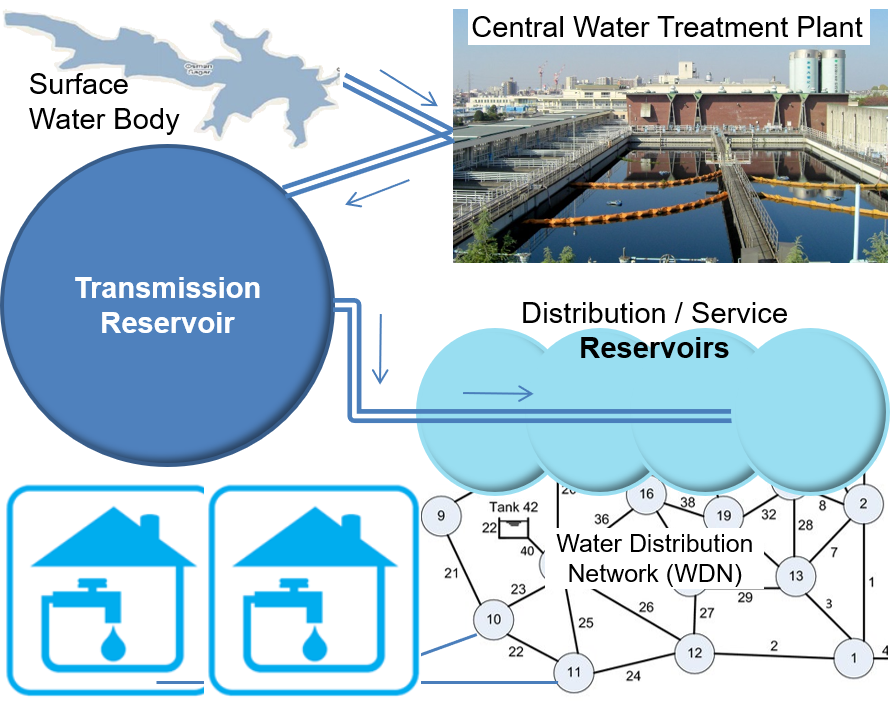
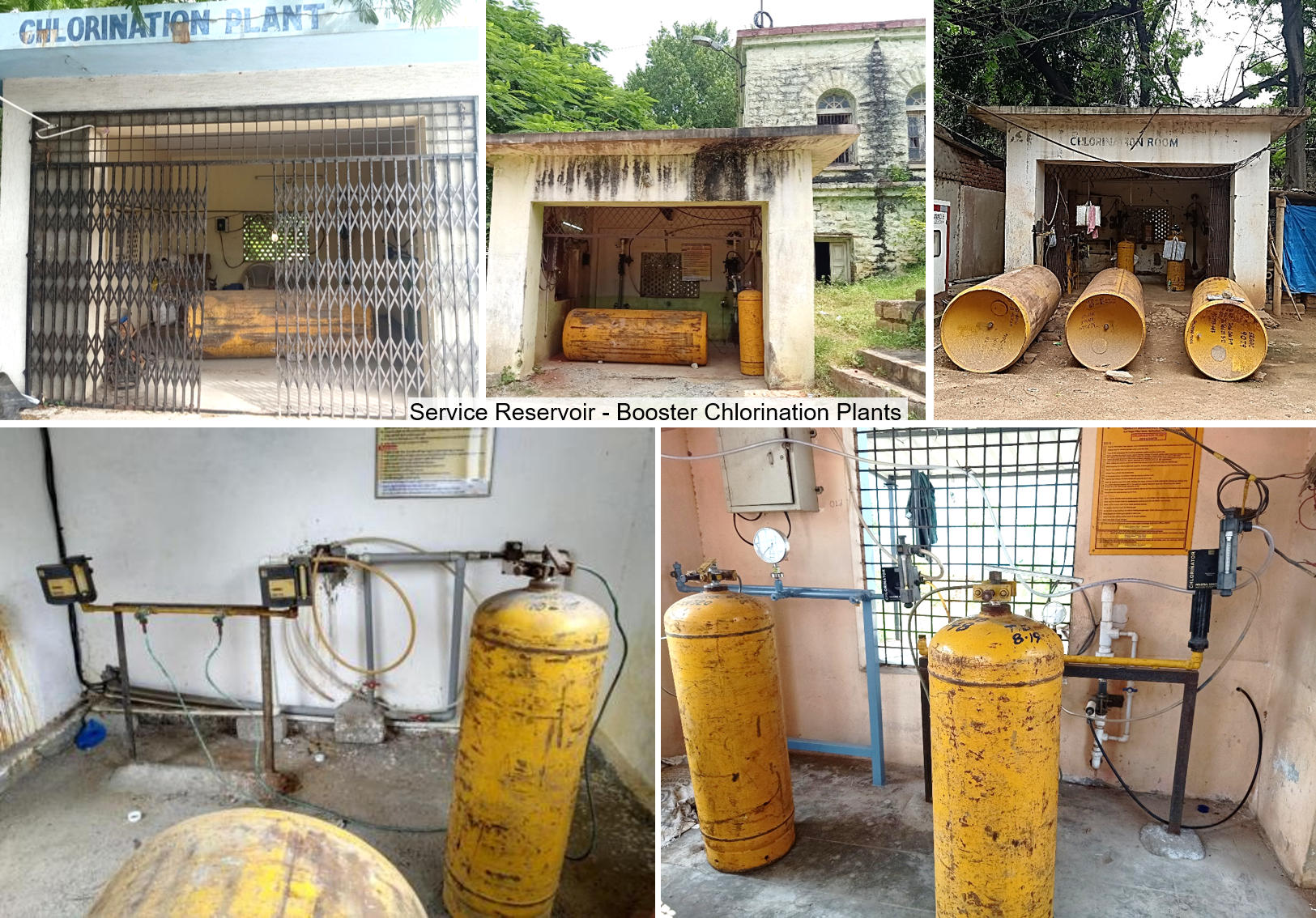
Despite, various water safety measures, the quality of water from each source would vary inherently on account of differences in exposure to minerals and contaminants. Central treatment plants (popularly called filter beds) clarify the water, perform quality checks and balance chemical parameters if required. Finally, the Central Treatment Plant disinfects (kill or neutralise microbial contaminants, if any) by chlorination. After removing microbial contamination, Central Treatment Plants release water to transmission reservoirs and Service Reservoirs with enough residual chlorine to prevent recontamination during the course of transmission and storage. In other words, residual chlorine in treated water is a kind of security protection against any microbial contamination, on the way. Levels of residual chlorine gradually reduce as treated water travels over the distribution network because of reactions with natural organic matter and pipe-wall materials. Thus, the residual chlorine level reduces, by the time treated water reach Service Reservoirs. Hence, booster chlorination is done at Service Reservoirs to raise the level of residual chlorine, before supply to households through distribution networks.
Figure 2: Some Service Reservoir - Booster Chlorination Plants.
The presence of chlorine residual in drinking water indicates that: 1) a sufficient amount of chlorine was added initially to the water to inactivate the bacteria and some viruses that cause diarrheal disease; and, 2) the water is protected from recontamination during storage & transmission. The presence of free residual chlorine in drinking water is correlated with the absence of disease-causing organisms, and thus is a measure of the potability of water. When chlorine cannot be detected in a municipal tap water, this indicates that either contamination has entered somewhere in the pipe lines from service reservoir to the tap or enough chlorine was not added at the Service Reservoir.
Three types of chlorine residual can be measured. These are;
- Free residual chlorine (FRC), that kills microorganisms most effectively, is often called simply Residual Chlorine, RC, Free Chlorine, FC, or Chlorine Residual. All these terms are synonymous. Free chlorine in water consists of aqueous molecular chlorine, namely hypochlorous acid (HOCl) and hypochlorite ion (OCl⁻). Free chlorine is a fast-acting disinfectant and is highly effective against microorganisms. In water treatment utilities and municipal water departments, the abbreviation 'RC' invariably means 'Residual Chlorine'. In India, most municipal water utilities use chlorine gas for disinfection, which, when added in sufficient quantity, leaves free residual chlorine (FRC or more commonly abbreviated as RC).
- Combined chlorine: When free chlorine reacts with various chemicals in water, combined chlorine is formed. Some types of combined chlorine do kill microorganisms, but too slowly. As mentioned above, RC is most effective in killing microorganisms that may enter into intermediate storage and the distribution system. Combined chlorine is also formed in swimming pools, where its measurement is important to know the quality of pool water.
- Total chlorine: Free Residual Chlorine + Combined Chlorine = Total Chlorine.
Testing for Free Residual Chlorine and Total Chlorine is comparatively easier than testing for combined chlorine. Thus, when we want to know the level of combined chlorine in water, we test for Total Chlorine and subtract the measured level of Free RC. If we know that the level of combined chlorine is insignificant, and tests for free chlorine is not available, Total Chlorine test results can be used as approximate indicator of free residual chlorine.
Free Chlorine in water is unstable and the amount of chlorine in water may drop quickly, especially in warm climate like that of Hyderabad. Sunlight causes free chlorine to disappear quickly. Shaking the water in a container will also make Free Chlorine disappear soon. Hence, Chlorine testing should be carried out on-site.
Guidelines for Free Residual Chlorine in Drinking Water Supplies:
The World Health Organization (WHO) recommends that there should always be a minimum of 0.5 mg/L RC at all points in a piped supply, particularly when there is risk of cholera. In areas where there is little risk of a cholera outbreak, there should be a chlorine residual of 0.2 to 0.5 mg/L at all points. Too much chlorine in water gives rise to a bleaching powder smell. Hence, the WHO specifies a maximum permissible limit of 5.0 mg/L residual chlorine.
The Indian standard for drinking water quality (IS10500, 2012) specifies a general minimum of 0.2 mg/L tested at the consumer-end (households). When protection against viral infection is required, the minimum residual chlorine level at the consumer end should be 0.5 mg/L. The maximum permissible level of residual chlorine is set at 1.0 mg/L by IS10500 for aesthetic reasons. Considering that Hyderabad does sporadically experience waterborne viral disease outbreaks such as hepatitis (jaundice), the targeted consumer-end minimum residual chlorine level should be 0.5 mg/L.
Testing Methods:
DPD Visual Comparison and Colorimetric Methods:
Various DPD methods are the current industry standard for testing of chlorine. When DPD (N,N-diethyl-p-phenylenediamine) reacts with chlorine in water, at the correct pH (6.3 to 6.6), it undergoes an oxidation reaction to form a distinctive magenta/pink coloured-dye called Wurster dye. The intensity of this distinctive magenta/pink colour is directly proportional to the concentration of chlorine in the sample. The concentration of free chlorine is determined visually using a colour comparison chart, or with instruments such as a dedicated chlorine photometer or general purpose spectrophotometer.
DPD formulations for chlorine testing are conventionally numbered 1 to 4, as follows:
- DPD No. 1: Measures free available chlorine (along with bromine and ozone).
- DPD No. 2: Measures monochloramine. Used in conjunction with DPD No. 1 to differentiate chlorine fractions.
- DPD No. 3: Measures total chlorine. It is added to the already-reacted DPD No. 1 sample to measure combined chloramines.
- DPD No. 4: Measures total available chlorine directly in a single test.
- DPD No. 1 + DPD No. 3: The most common combined method to determine free, combined, and total chlorine sequentially.
DPD formulations for visual comparison testing are different from instrument grade formulations. DPD-Rapid formulations for visual compairson testing include a filler for faster disintegration. The disintegrant filler can leave the water sample with a cloudy, white tint. This does not affect visual colour matching. Rapid tablets give reliable results for visual tests, but the cloudiness makes it unsuitable for accurate readings with a photometer. The Instrument grade aka photometer grade DPD formulations do not have disintegrant filler and may dissolves slowly. These formulations, when dissolved do not interfere with machine reading of colour change due to the chemical reaction of chlorine with the DPD reagent.
DPD Rapid formulations can be in the form of tablets, powder sachets or multi-test bottles containing DPD powder. DPD reagents are highly hygroscopic and chemically reactive. When exposed to ambient air and moisture, DPD powder and tablets undergo premature oxidation or absorb water, leading to caking, reagent discoloration, and false-negative or biased test results. Hence, foil packed tablets, that allow expression of single tablet into a test tube, are easy to use and offer the highest precision. Foil packed sachets should provide the same precision but may be a little more cumbersome in the field. Moreover there is the risk of some powder spilling outside of the test tube, while the sachet is cut open and its countent is poured into the test tube. Mlti-test DPD powder bottles may be cost-effective for high-volume testing, though they are prone to degradation from moisture and heat.
Note that sensitivity range of DPD-Rapid formulations vary depending on the intended use cases. Low range DPD formulations for detection of free chlorine in 0 to 3.0 mg/L range are primarily designed for municipal drinking water testing. Standard range DPD formulations for detection of free chlorine in 0 to 5.0 mg/L range are designed for testing of chlorine in municipal drinking water supplies as well as swimming pools. However, exact sensitivity limits depend on the measuring equipment, in addition to senstivity of the DPD formulation. Typically limit of visual comparison by matching with colour charts or color discs is in the range of 0 to 4.0 mg/L.
FAS-DPD Drop Titration of Free Residual Chlorine (FAS-DPD Method):
The FAS-DPD (Ferrous Ammonium Sulfate - N,N-diethyl-p-phenylenediamine) titration method is a more precise test for measuring Free Residual Chlorine. At first DPD is added to the water sample. DPD is oxidised by free chlorine in the water sample, changing its colour to pink. The FAS, added drop by drop, acts as a reducing agent, turning the pink oxidized DPD indicator back to a colorless endpoint. Free chlorine is estimated by the number of FAS drops consumed to turn pink oxidised DPD back to the colourless end-point and the drop equivalence. For example, if each drop of titrant consumed is equivalent to Free chlorine level of 0.2 mg/L and 5 drops was consumed till colourless DPD endpoint, then the free chlorine level would be 1.0 mg/L. This method eliminates subjective color matching. However, the method requires three steps, namely; (a) colour development by addition of DPD reagent, (b) counting of drops consumed, and (c) calculation of result by multiplying number of drops consumed with the drop equivalence. Under counting, over counting and errors in calculation can affect test results. Operators should be well-trained and comfortable with the calculation of test result from number of FAS drops consumed till end-point.
Legacy Methods:
Prior to development of the DPD method, Orthotolidine-Arsenite (OTA) visual colour comparaison was the mainstay of residual chlorine testing by municipal water utilities for a long time. Gradually the OTA test is being phased out.
The starch-iodide (iodometric) method is one of the oldest analytical techniques for measuring chlorine. Free and combined chlorine oxidize potassium iodide (KI) into free iodine (I₂), which then reacts with starch to form a distinct deep blue or purple starch-iodine complex. The intensity of this color is visually compared against a standardized color chart to estimate the chlorine level. Today, the starch-iodide method primarily survives as a quick semi-quantitative tool in the form of test strips or papers for high-range, total-available-chlorine detection.
A Survey of Resources for Free Residual Chlorine Testing of Municipal Water in Hyderabad, India:
IHS Laboratory Visual Comparison Method, Using LaMotte® DPD R1 Tablets:
The test requires LaMotte® DPD #1 Rapid, visual grade tablets, a 5-ml test tube and a laminated colour comparator chart. The laminated colour chart has 8 shades corresponding to free chlorine values ranging from 0.0 to 5.0 mg/L. This colour chart was developed based on experiments using a range of known chlorine concentrations in water and LaMotte® DPD R1 visual grade tablets. The 5-ml test tube options were identified by trials using locally available 5-ml borosilicate screw-cap bottles. However, a 10-ml tube with 5 ml mark can also be used.
Figure 3: Contents of a DPD Rapid Test Kit
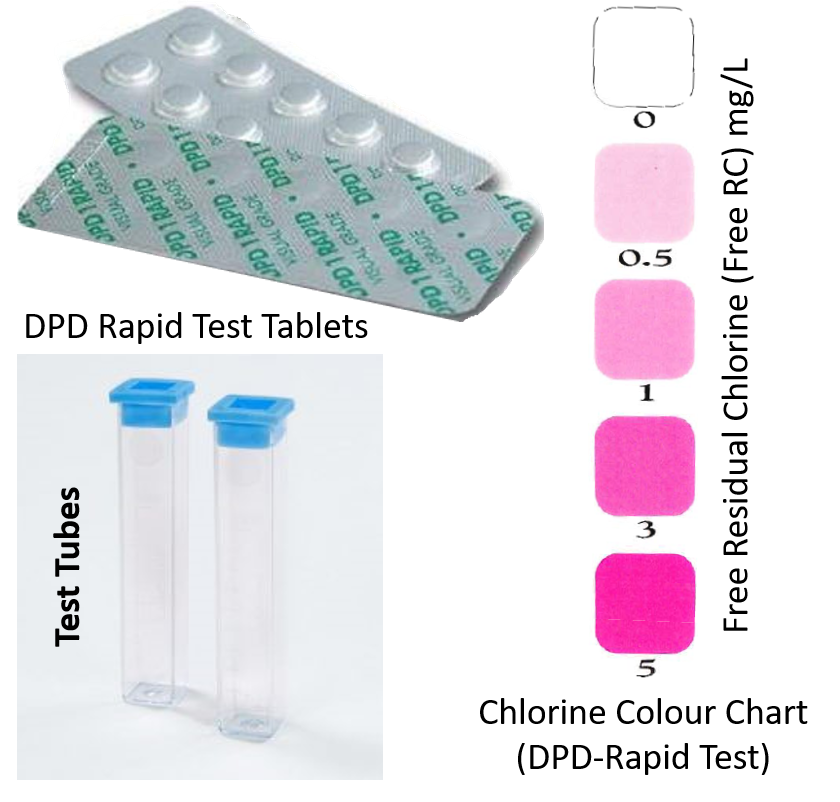
Procedure: First, rinse the test tube with the water to be tested. Then, refill the tube up to 5-ml mark. Note that the LaMotte's DPD #1 Rapid, visual grade tablet is formulated to test a sample volume of 5-ml. Position the DPD 1R tablet blister strip on top of the test tube and press from other side to release a tablet directly from the blister pack, into the tube. Wait till the tablet dissolves completely. Read result immediately after the tablet is dossolved. If RC is present, colour of test-sample turns to a shade of red depending on the level of free chlorine. Measure strength of colour against standard colours on the visual comparison chart to determine the chlorine concentration. The stronger the colour, the higher the concentration of chlorine in the water.
Why did we develop a chart to replace LaMotte's color chart?
Positive residual chlorine values for safe drinking water typically range from 0.2 to 0.5 mg/L at the consumer-end, though values entering distribution networks can reach up to 4.0 mg/L. Proper granularity in color charts is vital for accurately interpreting field tests, as slight color variations represent critical differences in water safety. Because granular color differentiation is crucial for reading DPD test kits, visual charts must offer a clear gradient. Because municipal water requires a precise balance to ensure safety without creating unpleasant taste or odor, testing for drinking water necessitates high-definition color charts. Conversely, swimming pools function safely at wider ranges, allowing testing tools to be less granular.
Earlier, up until say 2020, LaMotte's LC-8927 color chart had 5 shades calibrated for free chlorine values of 0.0, 0.5, 1.0, 3.0 & 5.0. IHS water quality investigators used these color charts for many years to test residual chlorine in Hyderabad Metro Water Supplies. Development of a lighter pink colour compared with the pink shade for 0.5 mg/L was interpreted as 0.2. To assure the recommended chlorine level at consumer-end, booster chlorination is taken up at service reservoirs. Many a times residual chlorine at service reservoirs would be higher than 1.0 mg/L but less than 3.0 mg/L. Water quality investigators had to interpolate between the calibrated shades for 1.0 and 3.0 mg/L for intermediate colour developments. Recently, by 2024, the LaMotte color chart has become even less granular, with only four shades at 0.0, 0.5, 3.0 and 5.0 mg/L (see Figure-4). LaMotte has not disclosed a specific reason for changing the LC-8927 color chart from a 5-point scale to a 4-point scale. It appears, LaMotte's latest chlorine color chart is primarily designed for chlorine testing in swimming pools. It does not provide the required granularity for chlorine testing in drinking water supplies.
Figure 4: LaMotte's DPD Rapid Visual Comparison Color Charts
In order to develop a more granual colour chart for chlorine testing, the IHS Laboratory undertook a series of experiments using a more granular range of known (spiked) free chlorine concentrations, LaMotte's DPD #1 Rapid, visual grade tablets, a 5-ml test tube. The colour chart, shown in Figure-3 above, was finalised after several iterations and an expanded panel of observers to compare colour developed in test tubes with corresponding shade in colour chart. The final colour chart was verified with a panel of observers by randomly ordering the spiked chlorine solutions that were coded to mask the true concentration from the observers. Physical dimensions of the colour chart was finalised by taking feed back from groups of water action volunteers who attended a training program on residual chlorine testing.
Test Tube Options for LaMotte's DPD #1 Rapid, visual grade tablets:
Although, LaMotte's DPD #1 Rapid, visual grade tablets are formulated for a sample volume of 5 ml, they do not provide 5-ml test tube. Instead, the LaMotte 0106, 10-ml plastic square test tube, primarily designed for their Octa-Slide system is offered for use with color charts. These tubes are graduated with marks at 2.5 mL, 5 mL, and 10 mL. When used for DPD #1 Rapid, that is formulated for 5-ml sample volume, the tube should be filled up to the 5-ml makr. Inadvertent filling of the tube to its full capacity of 10 ml would underestimate true chlorine level. Another disadvatage is that clarified polypropylene test tubes suffer from photo-oxidative degradation when repeatedly exposed to sunlight. The test tubes would deteriote over time by yellowing, surface micro-cracking, or hazing. Discoloration and hazing would affect fidelity of visual colour comparison. Moreover, these test tubes are comparatively more expensive than borosilicate glass tubes to start with. Periodical replacement of these clarified polypropylene test tubes would add to overall cost of water quality monitoring operations.
Figure 5: Trials Using LaMotte’s DPDR1 Testabs, 10ml Graduated Plastic Square Tube and Latest Chlorine Color Chart; IHSLab, 14 Oct. 2026.
The IHS Laboratory identified 5-ml borosilicate screw-cap bottles as an alternative. These are readily available at lower cost. During the course of training programs on chlorine testing, the IHS laboratory gathered feedback from participants by presenting them both options, namely the 10-ml plastic square tubes and 5-ml screw-cap borosilicate glass bottles. Participants were more comfortable using the 5-ml screw-cap borosilicate glass bottles. Advantages of 5-ml borosilicate glass bottles include; (a) minimal risk of error due to wrong sample volume, (b) easy cleaning of the 5-ml glass bottles, and (c) usability for longer periods except for loss due to breakage.
Figure 6 Trials Using LaMotte’s DPDR1 Testabs, 5-ml Glass Vials and Latest Chlorine Color Chart; IHSLab, 01 Nov. 2026.
Sourcing LaMotte DPD Rapid Tablets for Residual Chlorine Testing:
The LaMotte company manufactures a wide range of chlorine test kits including a variety of DPD Rapid TesTabs numbered 1 to 4. DPD Rapid #1 measures free chlorine, DPD #2 measures monochloramine (a component of combined chlorine), and DPD #3 measures dichloramine or combined chlorine (monochloramine + dichloramine). DPD #4 measures total available chlorine, which is the sum of free and combined chlorine. LaMotte TesTabs are packed in individual, blister-style foil packaging. The packaging is designed for easy dispensing and optimal freshness. Tablets in the foil dispenser are individually sealed, allowing field workers to pop them directly into a test tube by pushing them through the back of the foil. Each foil (dispenser) usually contains 10 TesTabs. LaMotte 6999A Visual Grade TesTabs, DPD #1 are appropriate for free residual chlorine testing by visual comparison method.
As of 4th June 2018, a search for International Districutors in India yielded contact details of three firms in India. However, a recent search of LaMotte's Where to Buy page for 'Drinkig Water', 'Pool Spas & Aquatics', and 'Water & Wastewater' 'markets' in India did not yield any Dealer/Distributor/Retailer. However, responding to an email to LaMotteAsia@lamotte.com, seeking a list of their dealers in India, LaMotte Asia shared the contact details of Swan Environment.
- Swan Environmental Pvt. Ltd., Hyderabad. Address: Plot No: 922 & 935 2nd Floor, Swami Ayyappa Co-op Society Madhapur, Hyderabad Telangana - 500081; Emails: info@swanenviron.com; jagadeesh@swanenviron.com; Tel: 040-40216184 / 85; Webpage: https://www.swanenviron.com/water-chlorine-determination-kit.html The IHS Laboratory has for many years, procured LaMotte's DPD tablets from Swan Environment. However, they usually require advance orders. Occasionally they may fulfil small orders, if remainders from other orders are available with them.
- AIC Agro Instruments (P) Ltd., Kolkata: Address: 62/J/1, Maharaja Tagore Road Kolkata - 700031; Tel: +91-33-24732151, 24733215; Email: sales@aicagroinstrument.com. However, this firm focuses on soil related testing solutions. A search of their website, in July 2026, did not yield any result for LaMotte DPD products. Responding to an email request in July 2026, the firm informed that they are focusing on indigenously produced O -Tolidine kits for free Chlorine testing, which is relatively less expensive, and the reagent has a longer self life. However, they could execute bulk orders for LaMotte DPD products.
- United Spectrum Instruments. Address: 5/45 Karunaa Conclave, 3rd Floor, AD Block, 1st Street, Anna Nagar, Chennai - 600040, Tamil Nadu. Tel: +91 97899 04948, +91 93631 83748; Emails: info@unitedspectrum.in; naren@unitedspectrum.in. This firm appears to focus on instrumentation for manufacturing. However, responding to an email request in July 2026, the firm informed that they do offer LaMotte products, provided firm orders giving specific part number and quantity is indicated to them in advance.
As of July 2026, Swan Environment appears to be the only active dealer of LaMotte DPD Rapid Tablets. The key to sustainable procurement of LaMotte DPD tablets is to place advance orders. Moreover, quoted price for LaMotte DPD tabletes may vary depending on quantity orders. Hence, it is advisable to cross check prices and team-up with other consumers of DPD tablets.
Amazon.in: Some sellers may provide LaMotte DPD Rapid #1 TesTabs through Amazon.in. Even if one searches for "LaMotte DPD Rapid #1 TesTabs", Amazon.in would show up many similar looking products but with different specifications. One has to be careful to identify the correct product that clearly states DPD #1 and Visual Grade TesTab.
Lovibond® SuddhCheck™ FRC Kit and/or DPD R1 Tablets for FRC by Visual Comparison Method:
About Lovibond India:
Lovibond, founded in the UK in 1885, is now a part of the Tintometer Group based in Germany. Lovibond product manufacturing facilities are based in Germany, UK, USA and India. Tintometer India has a manufacutring facility in Hyderabad for specialized custom water testing kits, reagents, and NIST-traceable buffers tailored to the Indian and broader Asian markets. Address: Door No: 7-2-C-14, 2nd, 3rd & 4th Floor Sanathnagar Industrial Estate, Hyderabad, 500018, Telangana. Tel: +91 (0) 40 23883300, Toll Free: 1 800 599 3891/ 3892, Email: indiaoffice@lovibond.in. Note that the linke resulting from a search for 'Lovibond official website' resulting in https://www.lovibond.com/ may not provide a link to their India site. Instead, search for 'Lovibond India website' which would lead to the Tintometer India webstite at https://www.lovibond.in/.
Lovibond SuddhCheck FRC Kit and/or Lovibond DPD R1 Tablets:
The FRC SuddhCheck Kit (Part No. IN415030MK) consists of (a) DPD No. 1 Rapid Tablets, (b) a 10-ml plastic sample vial/tube, (c) a laminated FRC Color Card, and (d) an instruction card. The kit includes a box containing 10 strips, each with 10 DPD No.1 Rapid tablets (Lovibond Part No. 511310BT). The 10-ml square plastic vial has a clear face on opposing sides and frosted face on the other sides. The clear face has a mark indicating 10-ml. The frosted side is graduated at 1 ml intervals up to 10-ml. The square plastic vial comes with a cap. The laminated color card has seven shades covering the working range of 0 - 3 ppm (mg/L). The instruction card lists the following test procedure:
- Take 10 ml water sample in a plastic vial.
- Add one tablet of DPD1 Rapid to the vials.
- Cap the vial immediately and mix well.
- Notice the colour change and immediately compare it with the colour card.
- The matching colour corresponds to the reading of the Free Residual Chlorine in mg/L (ppm) in the water sample.
Figure 7: Contents of Lovibond® SuddhCheck™ FRC Kit
Procedure: First, rinse the test tube with the water to be tested. Then, refill the tube up to 10 ml mark. Note that the Lovibond's DPD No.1 Rapid tablet is formulated to test a sample volume of 10-ml. Position the DPD 1R tablet blister strip on top of the test tube and press from other side to release a tablet directly from the blister pack, into the tube. Wait till the tablet dissolves completely. Read result immediately after the tablet is dossolved. If RC is present, colour of test-sample turns to a shade of red depending on the level of free chlorine. Measure strength of colour against standard colours on the visual comparison chart to determine the chlorine concentration. The stronger the colour, the higher the concentration of chlorine in the water. Figure 8 shows images from trials, at IHS Laboratory, of Spiked Free Chlorine Samples, using Lovibond's DPDR No.1 Rapid tablets, Lovibond's 10-ml square plastic vial and Lovibond's Color Card.
Figure 8: Trials of Spiked Free Chlorine Samples, using Lovibond's DPDR No.1 Rapid Tablets And Lovibond Color Card; IHSLab, 17 Jul 2026.
Figure 9 shows images from trials, at IHS Laboratory, of Spiked Free Chlorine Samples, using Lovibond's DPDR No.1 Rapid tablets, Lovibond's 10-ml square plastic vial and IHS Laboratory's visual comparison color chart.
Figure 9: Trials of Spiked Free Chlorine Samples, using Lovibond DPDR No.1 Rapid Tablets And IHS-Lab Color Chart; IHSLab, 17 Jul 2026.
Sourcing Lovibond SuddhCheck Kit and DPD Rapid Tablets:
Note that the BT in Lovibond's part number '511310BT' indicates blister-packed tablets. Tintometer India imports DPD powder and formulates into blister-packed tablets for their Lovibond® SuddhCheck™ FRC Kits and refills. Although, the kit contains 100 DPD No. 1 Rapid tablets, refill packs of 500 and 1000 DPD No.1 Rapid tablets are available. Tintometer India does not provide its Lovibond® Water Products Price List in its official website. Instead, one has to request the corporate pricing sheet directly from Tintometer India Private Limited. Zonal Sales Manager: Tel: +91 (0) 40 23883381, Mob: +91 9842012001, Emails: indiamarketing@lovibond.in or indiaoffice@lovibond.in. Their price quotes for DPD No.1 Rapid tablets may vary depending on quantity of orders. Hence, it is advisable to cross check prices and team-up with other consumers of DPD tablets.
Lovibond auhtorised retailers in Hyderabad include; Asian Scientific Instruments, 4-1-10, Asian Estate, Tilak Road, Opposite Church Building, Hanuman Tekdi, Koti, Hyderabad - 500001; Tel: 91-40-24754607; Email: info@asianhyd.com.
ORLAB's Chlorine Test Kit (OR-RCl2-01) and DPD Products for FRC by Visual Comparison Method:
ORLAB (Orlab Instruments Pvt. Ltd.) was founded in 1998 and is based in Hyderabad. The company was founded in 1998 and is based in Hyderabad. Address: 11-5-246/A, HPC Road, Moosapet, Hyderabad - 500 018, Telangana, India, Ph:+91(40) 6721 6383, Sales Department; Mob: +919393895552, Email: orlab@orlabindia.com. ORLAB has a range of kits for water and soil testing. Their chlorine test kits are described here.
ORLAB's DPD Sachet Kit:
The ORLAB DPD sachet test kit (Figure 10) includes; (a) a packet of 100 single use DPD powder sachets (pouches), (b) two 10-ml glass test tubes with cork caps, (c) a test tube stand, (d) a DPD chlorine colour chart, (e) a pair of scissors, and (f) an instruciton manual. Each DPD sachet (pouch) contains a premeasured quantity (100 mg approx) of DPD powder to be used in 10-ml water sample. Measurements in IHS Laboratory showed that the weight of DPD powder contained in 3 sachets was on average 102.4 mg. The glass test tubes have a 10-ml mark. The DPD chlorine colour chart has 9 shades corresponding to free chlorine values of 0.0, 0.2, 0.4, 0.6, 0.8, 1.0, 1.5, 2.0 and 3.0 mg/L respectively. The flimsy scissors provided in the kit are not very useful for cutting open the DPD sachets. However, the sachets can easily be torn open by hand to pour their contents into test tubes.
Figure 10: Contents of ORLAB's DPD Sachets - Chlorine Test Kit .
The Instruction manual lists 8 points under the title 'Procedure:'. However, the first point, which states that 'Chlorine color chart has been provided' is redundant. The sixth point under 'Procedure' talks of a transparent chlorine chart, where as the color chart printed on a white card is laminated. Probably, the kit designers meant 'laminated' instead of 'transparent'. The following is a streamlined narration of the test procedure.
- Take sample up to mark level in test tube.
- Add the contents of Chlorine DPD Powder Pouch to sample test tube.
- Replace the test tube cork tightly.
- Invert gently several times to mix the contents.
- Immediately (within one minute of reagent addition) place the test tube on the white strip beside the color strip and move up and down identify the matching color on the left hand side.
- Record Residal Chlorine value corresponding to the matched colour strip.
Procedure: First, rinse the test tube with the water to be tested. Then, refill the tube up to 10 ml mark. Note that the ORLAB DPD Powder Pouch is formulated to test a sample volume of 10-ml. While holding the filled in test tube in one hand, tear open one DPD pouch and pour its contents into the test tube. Replace the test tube cork tightly. Invert the test tube a couple of times till the powder dissolves completely. Read result immediately after the powder is dossolved. If RC is present, colour of test-sample turns to a shade of red depending on the level of free chlorine. Measure strength of colour against standard colours on the visual comparison chart to determine the chlorine concentration. The stronger the colour, the higher the concentration of chlorine in the water. Figure 11 shows images from trials, at IHS Laboratory, of Spiked Free Chlorine Samples, using ORLAB's DPDR Powder Sachets, ORLAB's 10-ml test tubes and ORLAB's Color Card.
Figure 11: Trials of Spiked Free Chlorine Samples, using ORLAB DPD Sachets and ORLAB Chlorine Color Card; IHSLab, 15 Jul 2026.
Figure 12 shows images from trials, at IHS Laboratory, of Spiked Free Chlorine Samples, using ORLAB's DPDR Powder Sachets, ORLAB's 10-ml test tubes, and IHS Laboratory's visual comparison color chart.
Figure 12: Trials of Spiked Free Chlorine Samples, using ORLAB DPD Sachets and ORLAB Chlorine Color Card; IHSLab, 15 Jul 2026.
ORLAB's DPD Powder Kit:
The ORLAB DPD powder kit (Figure 13) includes; (a) a bottle containing 10 gms DPD powder sufficient for 100 tests, (b) a red plastic spoon, (c) two 10-ml test tubes with cork caps, (d) a test tube stand, (e) a DPD chlorine colour chart, and (f) an instruciton manual. The test tubes, stand, color chart and instruction manual are same as in case of the DPD Sachet kit. According to the instruction manual, one scoop of DPD powder is to be added to 10-ml sample. Considering that the kit is designed for 100 tests and the bottle in the kit contains 10 gms of DPD powder, a scoopful of the powder should approximately weigh 100 mg. However, one set of measurements in IHS Laboratory showed that the scoop measures on average about 324 mg of the provided DPD powder. Another set of measurements of a little less than full scoop showed the, average weight of scooped DPD powder as 241 mg. While addition of excess DPD powder may not affect free chlorine test result, the excess per test consumption of DPD powder would substantially reduce the number of tests per kit.
Figure 13: Contents of ORLAB's DPD Powder - Chlorine Test Kit .
The IHS Laboratory tried both ORLAB's DPD-Sachet and DPD-Powder kits. Note that the reagent in both kits is the same, namely; DPD powder. The only difference is in the packing and dispensing. The Sachet kit provides premeasured DPD powder in sachets (pouches). The powder kit provides 10 gms of DPD powder in a bottle along with spoon designed to measure about 100 mg of powder for each test. The trials were conducted on 12th June, 2026. Images for the DPD powder trials are not shown here as they are similar to that of the sachet kit. Considering the pros and cons of the two test kits, summarised in the following table, ORLABs DPD Sachet (Pouch) kit appears preferable over the powder kit.
| Op. Parameter | ORLAB DPD-Powder Kit | ORLAB DPD-Sachet (Pouch) Kit |
|---|---|---|
| Reagent form | Loose powder supplied in a container/bottle | Pre-measured powder sealed in individual pouches |
| Dosing | Operator measures the required amount using a one scoop | Entire pouch is added directly to the sample |
| Cost per test | Excess consumption of DPD powder per test due to variation in accuracy of the spoon provided with the kit would substantially reduce the number of tests per kit. | As each sachet contains premeasure DPD powder and the kit contains 100 such sachets, the kit delivers the designed number of tests. |
| Ease of use | Requires careful measurement | Easy and quick to use |
| Reagent contamination risk | Higher because the container is opened repeatedly | Low because each sealed pouch is used once |
| Reagent stability | May absorb moisture after opening, affecting performance | Better protected from moisture and air |
Rakiro Biotech's Aquasol DPD Method Free Chlorine Test Kits:
Rakiro Biotech Systems was founded in 1993 and is based in Navi Mumbai. Rakiro ORLAB has a range of kits for water and soil testing. Their chlorine test kits are described here. The company develops easy to use chemical and microbial testing devices, field test kits, and formulation chemicals for consumer and industrial water treatment. Aquasol is one of their flagsip brands that includes a wide range of water quality test kits. Free Chlorine (DPD) Aquasol product codes include; AE205 (0.1-2.0 ppm), AE215 (0.2-4.0 ppm), AE225 (0.0-5.0 ppm). Aquasol AE215 FAS-DPD Drop Titration Method Free Chlorine test kit is described here.
The Aquasol AE215 Free Chlorine Test kit contains (a) FC1 reagent, (b) FC 3 reagent dispenser bottle, (c) a test jar (test tube), (d) a scoop, and (e) the instructions pasted to inner side of the kit-box cover. The kit is designed for 200 tests. The label on the FC1 bottle does not provide name of the active chemical reagent. However, the product name [Free Chlorine (DPD) AE215] and material safety data sheet for AE215 indicates that the active ingredient in FC1 bottle is DPD. The FC1 bottle does not label the quantity of DPD powder contained in it. Measurements at IHS Laboratory showed that each scoopful of powder weighs about 27.5 mg (average of 3 measurements). Considering that the test kit is designed for 200 tests, the total weight of DPD powder contained in the bottle is estimated at about 5.5 gms. The label on FC3 reagent bottle does not provide name of the active ingredient. Based on our understanding of the DPD Ferrous Titrimetric Method described in APHA Standard Methods (4500-Cl F.), it is inferred that the FC3 titrant bottle contains a formulation of FAS (Ferrous Ammonium Sulfate) in solution. It is assumed that the FAS titrant would be sufficient for 200 tests. The test jar is graduated at 5-, 10- and 25-ml. The scoop is meant to take out measured quantity of DPD powder from the FC1 reagent bottle and add to sample tube. The instruction sheet contains the following directions for use.
- Fill the test jar with the water sample up to the 10-ml mark.
- Add one spoonful of FC1.
- Mix well to dissolve.
- If a pink colour does not develop Chlorine is absent.
- If a pink colour appears, Free Chlorine is present.
- Now drop wise add FC3 counting the number of drops while mixing until the pink colour disappears.Note on the FC3 dispenser bottle:
- Gently press the dispenser to expel air and while pressing invert the dispenser and simlultaneously release the pressure.
- Hold the inverted dispenser vertically and gently press it to add drops into the test jar, while counting them.
- Replace the cap after use and store the reagent in the box.
- Keep away from direct heat and sunlight.
- Calculations: Free Chlorince as ppm Cl = 0.2 X (Number of drops of FC3)
- Notes:
- Once the end point (colourless) has reached, ignore if the pink colour reappears after sometime.
- Reagent FC1 is highly sensitive to moisture. So close the lid of the bottle immediately after use.
- Ensure that only dry spoon is used to handle the FC1 reagent.
Figure 14: AquaSol AE215 Free Chlorine Test Kit Contents, Test Procedure and Trial Test Results. Trial Date: 23-05-2026 & 31-05-2026.
Sourcing Aquasol Free Chlorine Test Kits:
Company Address: Rakiro Biotech Systems Pvt. Ltd., R, 466, T.T.C. Industrial Area, MIDC Industrial Area, Rabale, Navi Mumbai, Maharashtra 400701, Tel: (022) 47804040. M: +91 9849904339. Email: sales@rakiro.net. Aquasol dealer in Hyderabad: B.S.K Technologies, Door No 5-4-187/3 & 4/10, 1st Floor, Patel Trade World, Behind Hotel Moksh, M.G. Road (Ranigunj area), Hyderabad, 500003. M: +91 9849904339.
Orthotolidine Visual Comparison Method:
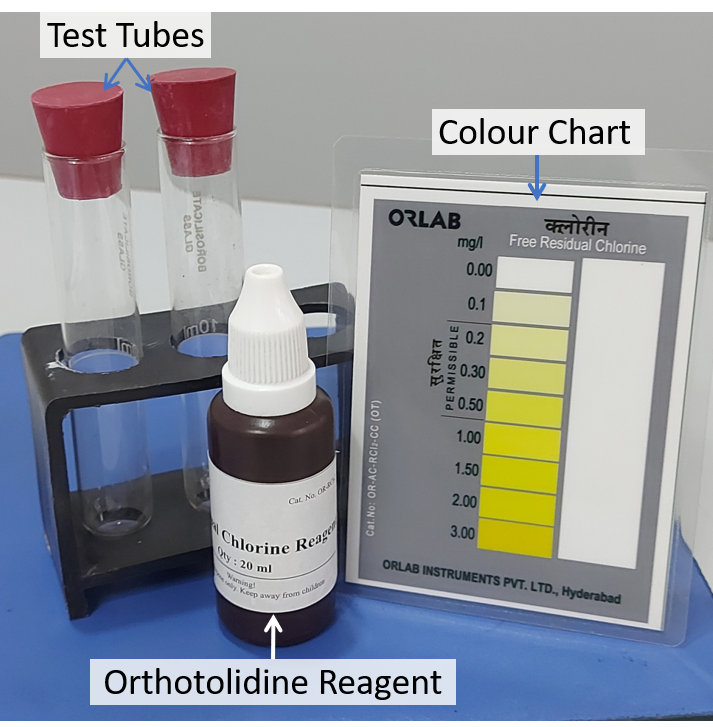
When Orthotolidine-arsenite (OTA) is added to a test-sample, it reacts with free residual chlorine in water producing a yellow-coloured compound. Intensity of yellow colour is proportional to the level free residual chlorine. Hence, comparison of colour developed in test-sample with a calibrated colour chart gives test result. Repeated and long-term exposure to Orthotolidine increases the risk of bladder cancer. Hence, the World Health Organization (WHO), recommends to prefer the safer DPD method. If the OTA method is chosen, Water Quality Investigators can minimise their risk by avoiding direct contact with the Orthotolidine reagent.
Figure 15: Contents of a Orthotolidine Rapid Test Kit
Starch-Iodide Visual Comparison Method:
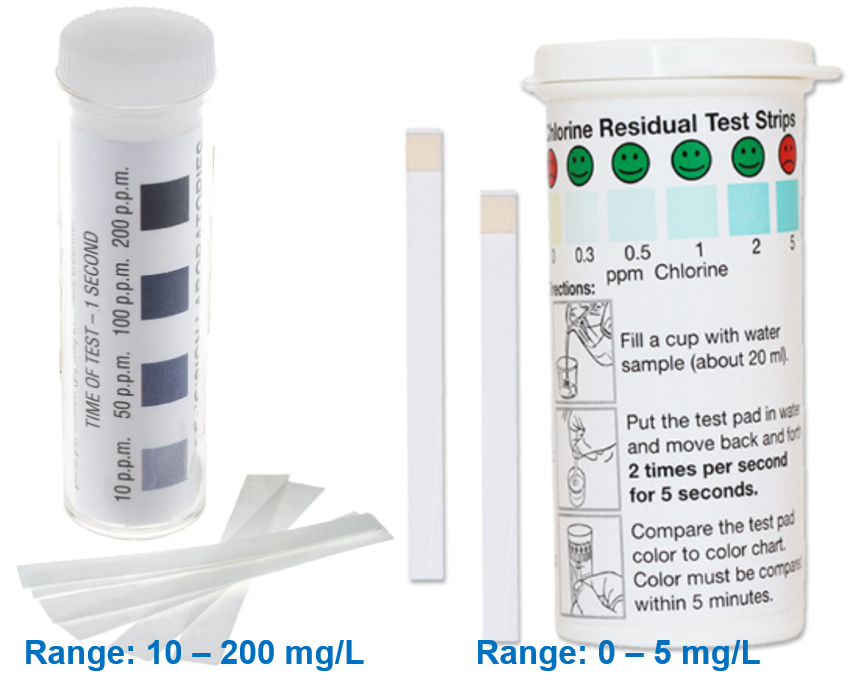
The starch-iodide test uses a potassium iodide starch test strip designed to detect low levels of chlorine in the range of 0 to 5mg/L or 0 to 10mg/L. The test-strip, when dipped in water for about 5 seconds, develops blue to purple colour depending on the level of total chlorine the test-sample. Note that this method measures total chlorine. Since, free residual chlorine is important to assure water safety, the starch-iodide method is usually not recommended. However, in cases where we know that formation of combined chlorine is limited and DPD test is not available, the starch-iodide method can give some idea of the residual chlorine level.
Figure 16: Starch-Iodide Test Strips
References:
- WHO. 2016. Chlorine Testing Fact Sheet. Geneva: World Health Organization (WHO); Fact Sheet: 2.31.
- WHO. 2013. Measuring chlorine levels in water supplies. Geneva: World Health Organization (WHO); 2013 Jul; Technical Notes Drinking-Water, Sanitation and Hygiene in Emergencies. https://www.who.int/teams/environment-climate-change-and-health/water-sanitation-and-health/environmental-health-in-emergencies/technical-notes-on-wash-in-emergencies
- WHO. 1996. Chlorine in Drinking-water. Background document for development of WHO Guidelines for Drinking-water Quality. Geneva: World Health Organization (WHO).
- IS 10500. Indian Standard Drinking Water Specification. Second Revision. New Delhi: Bureau of Indian Standard (BIS); 2012 May. https://law.resource.org/pub/in/bis/S06/is.10500.2012.pdf
- IARC. ortho-Toluidine. in: IARC. Chemical Agents and Related Occupations. IARC Monograph on the Evaluation of Carcinogenic Risks to Humans Volume 100F. Lyon, France: International Agency for Research on Cancer (IARC); 2012; pp. 93-100. https://publications.iarc.fr/123


To pick up sample collection bottle and/or schedule collection of samples: Email: ihslab@ihs.org.in with your address and contact telephone; OR WhatsApp: +919848011251; Or Call: 23211013/4.